The Governor Wants His City: A Deep Dive into Andrew Cuomo’s Audacious Mayoral Campaign

Four years after his resignation, the former governor is betting on a city in crisis to grant him a second act. Here’s what his candidacy means for New York.
every industry needs a leader
•
empower the leader in you
•
every industry needs a leader • empower the leader in you •
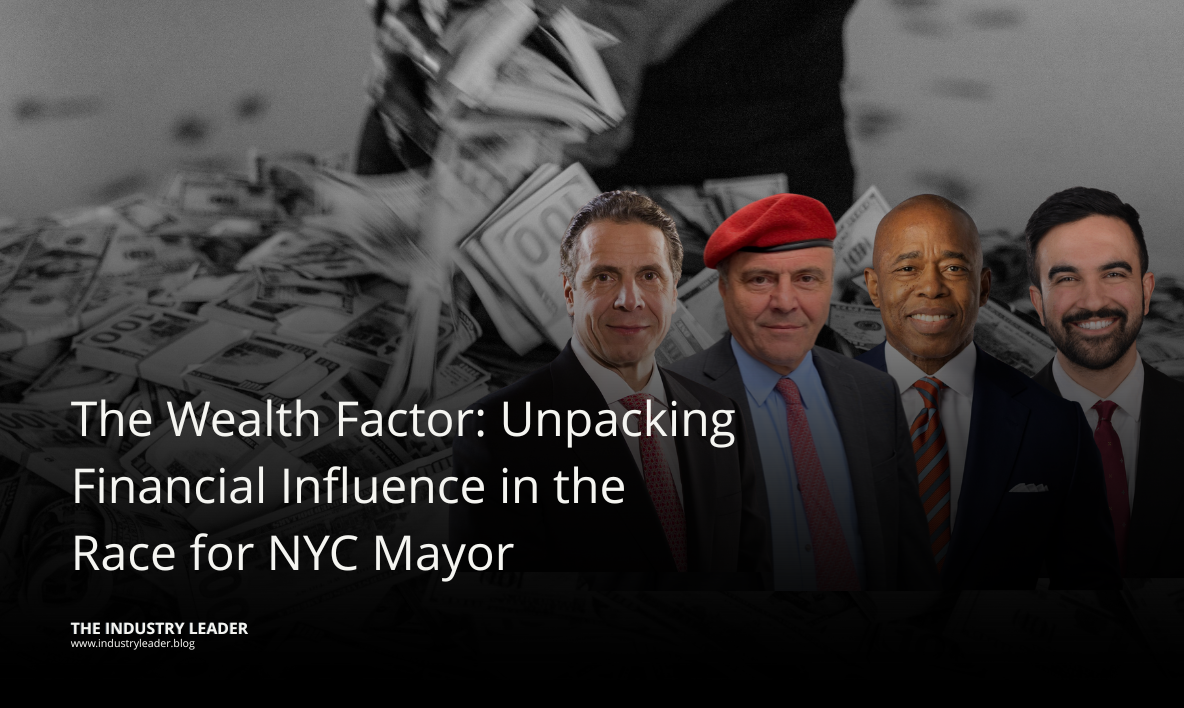
NEW YORK, NY – On Monday, July 14, 2025, former New York Governor Andrew Cuomo formally announced his candidacy for Mayor of New York City, marking one of the most dramatic political comebacks in recent city history. Standing before a crowd of supporters in Queens, the borough of his birth, Cuomo declared his intention to lead the city he once governed from Albany. Once a dominant force in state politics, Cuomo's reentry into public office—nearly four years after his resignation amid scandal—has reignited fierce debates about legacy, redemption, and leadership in a city still grappling with post-pandemic recovery, public safety concerns, and deep economic uncertainty.
This audacious move positions Cuomo as a formidable, if polarizing, figure in a crowded Democratic primary. His candidacy forces a city and a party to confront his complicated past while evaluating his proposed future. This profile examines the core questions surrounding his campaign: his motivations, his transformed public image, and his vision for New York City.
Motivation: A Quest for Vindication and a Return to Service
To understand Andrew Cuomo’s 2025 mayoral bid is to understand a career defined by ambition, dynasty, and a belief in the muscular exercise of executive power. His political origin story began not in an elected office, but as a key operative for his father, the celebrated three-term Governor Mario Cuomo. This formative experience instilled in him a deep understanding of political machinery and a self-conception as heir to a legacy of public service.
Cuomo's own ascent was methodical: from serving as Secretary of Housing and Urban Development (HUD) under President Bill Clinton, where he earned a reputation as a data-driven manager, to a term as New York’s Attorney General, where he cultivated a tough-on-Wall-Street persona. His three terms as Governor (2011-2021) were characterized by landmark progressive achievements—including legalizing same-sex marriage and passing a $15 minimum wage—often achieved through bare-knuckle political tactics and a centralized command-and-control style that earned him both allies and enemies.
The personal and political stakes of this mayoral run are immense. Following his resignation in August 2021 after a report from the state Attorney General concluded he had sexually harassed multiple women, Cuomo was rendered a political pariah. In his announcement speech, he framed this new chapter not as a simple comeback, but as a necessary course correction for the city. "I made mistakes. I’ve learned from them, and I’ve paid a price for them," Cuomo stated. "But I cannot stand by while the city I love spirals into disorder and decay. This isn't about my future; it's about ours."
He is framing the campaign as a mission, driven by a belief that his unique experience and aggressive management style are essential to tackle what he describes as a crisis of competence in city government.


The Evolving Image: From "America's Governor" to Political Outsider
Few modern political figures have experienced such a precipitous rise and fall in public perception as Andrew Cuomo. In the spring of 2020, his daily televised COVID-19 briefings made him a national symbol of steady leadership, earning him an International Emmy and the moniker "America's Governor." His PowerPoint-driven presentations were seen as a fact-based antidote to the chaos emanating from Washington.
That narrative collapsed in 2021. The sexual harassment allegations, coupled with revelations that his administration had obscured the true number of nursing home deaths during the pandemic, shattered his heroic image. He resigned before a likely impeachment, and the Democratic establishment that once championed him swiftly cut ties.
Today, Cuomo runs as an insurgent against that same establishment. Mainstream media outlets that once lauded him now cover his campaign with deep skepticism. Prominent women's rights groups, including the National Organization for Women, have already condemned his candidacy, vowing to oppose him vigorously. Labor unions, historically a cornerstone of his support, are fractured. While some construction and trade unions may see an ally in his focus on large-scale infrastructure, progressive and service-sector unions are expected to line up behind his challengers.
An early Mason-Dixon poll released shortly after his announcement highlights this divide. While Cuomo holds significant name recognition, his unfavorability rating among likely Democratic primary voters is over 50%. However, in a crowded field, his dedicated base of supporters gives him a viable, if narrow, path. His campaign has reportedly hired veteran Democratic strategist Lis Smith, known for her work on unconventional campaigns, signaling a strategy aimed at bypassing traditional media and appealing directly to voters.
The Vision: A Manager's Manifesto for New York
Andrew Cuomo's pitch to New Yorkers is a return to results-oriented governance, directly contrasting his record as a builder and manager with what he implies is the current administration's ideological drift. His policy priorities, outlined in his speech and on his new campaign website, are clear:
Public Safety: Cuomo has called for a "public safety surge," proposing to hire more police officers and grant the NYPD commissioner more autonomy. He directly criticized bail reform laws he himself signed, stating, "We have to be honest that the current system is not working. We must give judges back their discretion."
Economic Recovery & Housing: He advocates for aggressive, state-like intervention to spur development, including rezoning commercial districts for residential use and fast-tracking affordable housing projects. "The bureaucracy is killing this city's future," he declared. "We need to build, build, build."
MTA and Infrastructure: Leveraging his gubernatorial experience, Cuomo is making competency in managing the MTA a central theme. He has promised to take "personal responsibility" for improving subway service and safety, a clear jab at incumbent Mayor Eric Adams, with whom he has publicly clashed over transit issues.
His vision stands in stark contrast to his top-tier opponents. While Mayor Adams also centers his message on public safety, Cuomo is positioning himself as a more seasoned and effective executive. The contrast is even sharper with a leading progressive challenger like State Senator Zohran Mamdani, whose platform focuses on community-led safety solutions, tenant protections, and a "Green New Deal" for New York. The 2025 primary is thus shaping up to be a referendum on the soul of the Democratic Party: Cuomo's top-down, centrist pragmatism versus the grassroots, ideological progressivism of his rivals.
As the campaign unfolds, Andrew Cuomo's presence guarantees a contentious and closely watched race. His candidacy is a high-stakes gamble on the power of political redemption and the appeal of an iron-fisted executive in a time of crisis. Whether New York City voters are willing to make that bet remains to be seen.
For continued coverage of the 2025 NYC mayoral race and other political news, follow KIRU (@highaski) and The Industry Leader (@theindustrylead) on X.
Information published to or by The Industry Leader will never constitute legal, financial or business advice of any kind, nor should it ever be misconstrued or relied on as such. For individualized support for yourself or your business, we strongly encourage you to seek appropriate counsel.