The Wealth Factor: Unpacking Financial Influence in the Race for NYC Mayor
Balancing Billionaire Influence: Advantages, Concerns, and Implications for NYC's Future Governance
every industry needs a leader
•
empower the leader in you
•
every industry needs a leader • empower the leader in you •
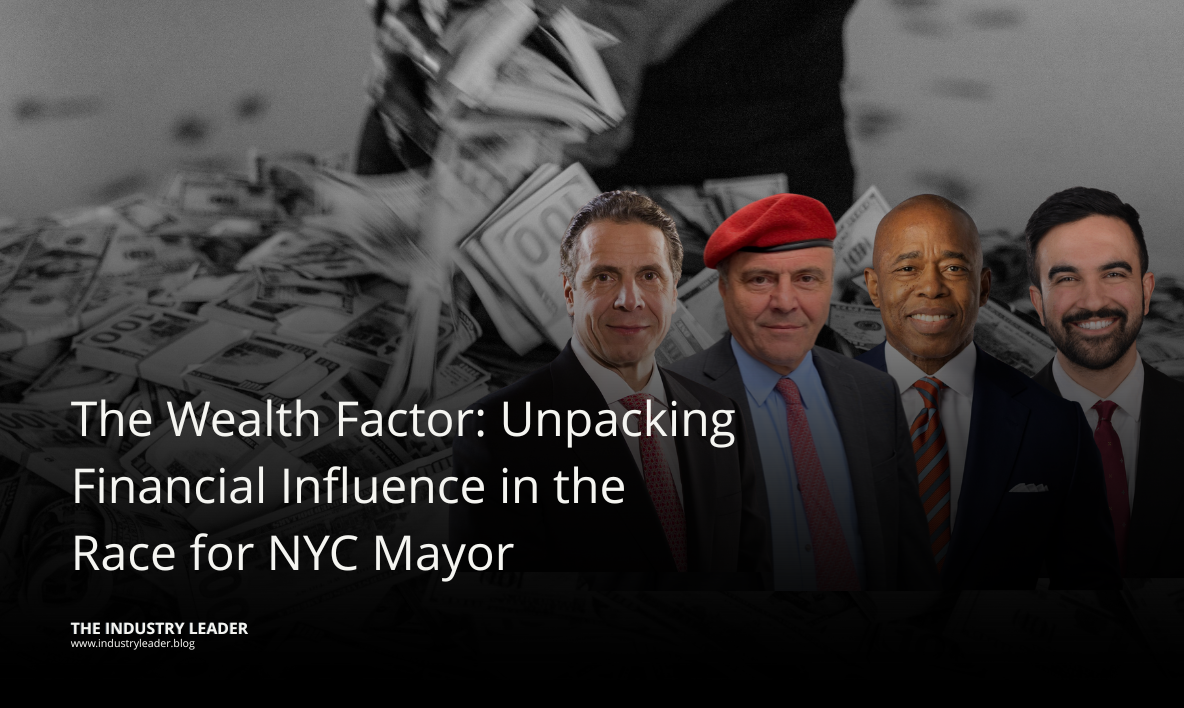
In the high-stakes world of American politics, the role of personal wealth and massive donations often sparks debate about the health of democracy. This tension—between financial freedom allowing individuals to back their visions and the need for public accountability to ensure equitable representation—is particularly acute in the 2025 New York City mayoral race. As candidates like Democratic nominee Zohran Mamdani, incumbent Eric Adams (running as an independent), former Governor Andrew Cuomo, and Republican Curtis Sliwa vie for City Hall, the influence of billionaires like hedge fund manager Bill Ackman underscores broader questions about money’s sway over elections. While wealth can empower bold campaigns, it risks eroding voter trust and skewing policy toward the elite, challenging democratic principles that prioritize the many over the few.
Definition and Examples
A self-funded candidate is one who primarily finances their campaign with personal resources, often drawing from substantial wealth without limits under Federal Election Commission (FEC) rules, which allow unlimited personal contributions or loans to one’s own campaign. Mega-donors, by contrast, are wealthy individuals or entities that pour large sums into super PACs or campaigns, often exceeding standard contribution caps through independent expenditures. In modern elections, these donors operate via vehicles like super PACs, enabled by the 2010 Citizens United decision, which amplified unlimited spending by outside groups.
Credible data from the FEC and NYC Campaign Finance Board (CFB) illustrates this dynamic. For instance, in the 2020 U.S. presidential cycle, self-funders like Michael Bloomberg spent over $1 billion of his own money, though he ultimately withdrew. In NYC, historical precedents abound: Bloomberg self-funded his 2001 mayoral bid with $74 million, outspending rivals and winning as a Republican-turned-independent, repeating the feat in 2005 ($85 million) and 2009 ($108 million). Nationally, Donald Trump loaned his 2016 campaign $66 million, blending self-funding with donor support. These cases, reported by outlets like The New York Times and Gothamist, show how wealth can reshape campaign dynamics, often favoring those with deep pockets over grassroots efforts.
Bill Ackman’s Role
Bill Ackman, the billionaire CEO of Pershing Square Capital Management, exemplifies mega-donor influence without being a candidate. Federal records show Ackman donated $250,000 to a super PAC backing Cuomo’s 2025 mayoral bid in April, part of nearly $5 million raised. However, by July, Ackman shifted support to Adams, urging Cuomo to exit the race and pledging “hundreds of millions” to counter Mamdani, whom he labeled a “socialist.” Ackman’s public stances, including his Trump endorsement in 2024 and criticism of progressive policies, have amplified his voice on X (formerly Twitter), where he argued Adams is “ready to go to battle, guns blazing” against Mamdani. Even non-candidates like Ackman can shape voter perceptions, as seen in polls where Mamdani leads despite billionaire opposition, potentially portraying him as an anti-elite underdog.
Advantages of Financial Independence in Campaigning
Self-funding offers clear benefits: it liberates candidates from special interest pressures, enabling unfiltered messaging. Bloomberg, for example, credited his independence for implementing policies like smoking bans and soda taxes without donor strings. In the 2025 race, while none of the main candidates are heavily self-funding, Cuomo’s access to mega-donors like Ackman (initially) and a reported $8.3 million from Bloomberg could mimic this freedom, allowing focus on crime and housing without grassroots constraints. Adams, bolstered by Ackman’s pivot, might similarly prioritize direct appeals on public safety. Mamdani, relying on small donors, contrasts this by emphasizing grassroots accountability, while Sliwa’s campaign could benefit if conservatives rally without billionaire interference.


Concerns About Accountability and Influence
Yet, outsized wealth raises alarms about democratic erosion. Watchdog groups like the Brennan Center for Justice warn that mega-donors and self-funders grant “enormous sway to the super-wealthy,” potentially prioritizing policies favoring elites over equitable representation. In NYC, Bloomberg’s tenure drew criticism for favoring business interests, as noted in City & State NY analyses. Past controversies, like the 2013 mayoral race where Bloomberg’s influence waned amid voter backlash, highlight risks of perceived “bought” elections. Analysts from Pew Research note this can distort policy, as wealthy donors often push tax cuts or deregulation.
Public Perception & Voter Trust
NYC voters have mixed responses to wealth-driven campaigns. Polling from YouGov shows 24% would support Mamdani in a hypothetical general election, reflecting appeal among those wary of billionaires. Brennan Center surveys indicate strong support (over 70%) for public financing to counter big money. NYC’s matching funds program, which amplifies small donations up to 8-to-1, alters dynamics by helping candidates like Mamdani compete against self-funders or donor-backed rivals, fostering trust by emphasizing constituent voices. Past results, such as Bloomberg’s narrow 2009 win amid spending controversies, suggest voters penalize perceived excess.
Balancing Act in Democracy
Wealth in politics is an inevitable reality in a free society, yet it poses structural challenges. The Brennan Center argues for reforms like small-donor matching to “put power back in the hands of individuals,” quoting that “Americans are fed up with the role of big money.” Pew perspectives highlight how affluent donors increasingly align with Democrats, but this shifts focus from broad needs. Ultimately, while financial freedom enables innovation, unchecked influence undermines voter equality—a tension NYC’s program seeks to mitigate.
Looking ahead, Ackman’s involvement could polarize the 2025 race, boosting Adams or Cuomo among moderates while galvanizing Mamdani’s base against “billionaire interference.” This may influence governance, with wealth-backed winners potentially prioritizing economic growth over social equity. Voters must weigh if such funding enhances or erodes trust, shaping not just City Hall but NYC’s democratic fabric.
Stay tuned for more updates on the election, and follow KIRU (@highaski) on X for ongoing coverage.
Information published to or by The Industry Leader will never constitute legal, financial or business advice of any kind, nor should it ever be misconstrued or relied on as such. For individualized support for yourself or your business, we strongly encourage you to seek appropriate counsel.