Muslim Communities in NYC: Priorities, Candidates, and Election Impact
Examining how Zohran Mamdani, Eric Adams, Andrew Cuomo, and Curtis Sliwa address Muslim concerns in the race for mayor.
every industry needs a leader
•
empower the leader in you
•
every industry needs a leader • empower the leader in you •
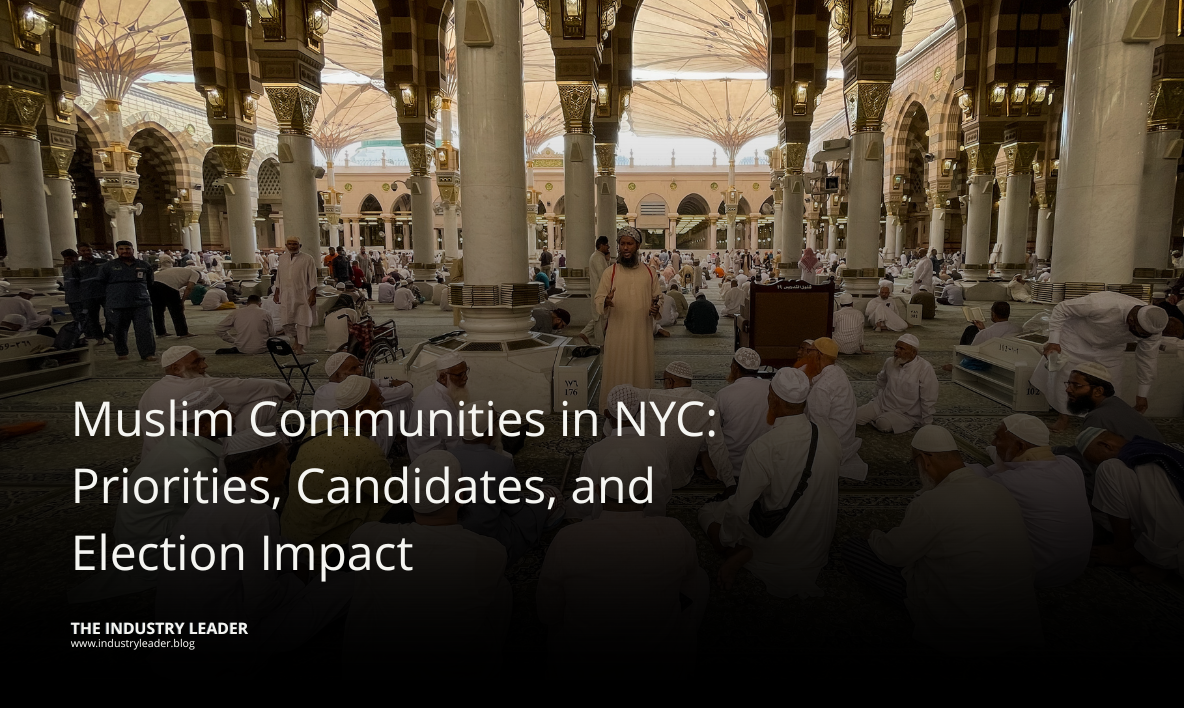
New York City, home to one of the most diverse populations in the world, includes a significant Muslim community estimated at around 769,000 individuals, comprising about 9% of the city’s residents. This group spans various ethnic backgrounds, including South Asian, Arab, African, and Albanian origins, with notable concentrations in Queens (such as Jackson Heights), Brooklyn (Bay Ridge), and the Bronx. Despite historical challenges like post-9/11 surveillance and rising Islamophobia, Muslim New Yorkers exhibit growing political engagement, with Pew Research indicating that 44% of U.S. Muslims voted in the 2016 election, rising to 54% among U.S.-born individuals. As the 2025 mayoral election approaches—with Democratic nominee Zohran Mamdani facing independent candidates Eric Adams and Andrew Cuomo, as well as Republican Curtis Sliwa—Muslim voters are increasingly visible through endorsements, organizing, and policy advocacy.
What Are the Most Pressing Policy Priorities for Muslim New Yorkers in 2025?
Muslim New Yorkers, like many immigrant and minority communities, prioritize issues tied to economic stability, civil rights, and cultural inclusion. Affordable housing remains a top concern, as rising costs in neighborhoods like Jackson Heights and Bay Ridge exacerbate displacement for working-class families. Education equity is another focus, with calls for better funding in under-resourced schools serving Muslim-majority areas and expanded access to halal food options in public institutions to accommodate dietary needs.
Police reform and surveillance are particularly acute, stemming from revelations of NYPD spying on Muslim communities post-9/11, which chilled free expression and civic participation. Organizations like CAIR-NY have highlighted the need to end such practices, emphasizing civil liberties amid ongoing concerns about profiling. Small business support is vital, given that New York City hosts 96,000 Muslim-owned enterprises, many run by immigrant entrepreneurs facing regulatory hurdles and economic pressures.
Social services, including mental health resources and community investments in underserved boroughs, round out priorities. The Muslim Community Network has advocated for programs addressing youth leadership and interfaith partnerships, while Pew Research data underscores high self-employment rates among Muslims, signaling a need for targeted economic aid. These issues reflect broader civic engagement trends, with Muslims actively participating in public life despite societal anxieties.
How Have Candidates Historically Engaged—or Ignored—Muslim Communities?
The four focus candidates have varied records on engaging Muslim New Yorkers, often reflecting broader tensions between public safety and civil rights.
Zohran Mamdani, the first Muslim Democratic nominee for mayor, has centered his career on issues resonant with the community. As a New York State Assemblymember, he has advocated for housing justice and police demilitarization, stating in a Jacobin interview, “New Yorkers are ready for a new generation of leadership that puts working people first.” His personal experience as a Ugandan-born Muslim informs his opposition to anti-Muslim surveillance, aligning with calls for reform.
Eric Adams, the incumbent running independently after the primary, has made symbolic gestures like hosting Iftar receptions during Ramadan and appointing Muslim advisors, including NYPD Detective Mohamed Amen as senior advisor. 45 He also supported broadcasting the Adhan citywide, earning praise from CAIR-NY for promoting religious diversity. 49 However, his endorsement of aggressive policing tactics has drawn criticism for potentially undermining civil liberties, creating a complicated stance.


Andrew Cuomo, also running independently post-primary loss, has a mixed history. He funded anti-radicalization programs criticized by some Muslims as profiling tools. During his mayoral run, he faced questions about limited engagement, including not visiting a mosque in over a decade. Yet, he has received endorsements from faith leaders and emphasized education and childcare in outreach efforts.
Curtis Sliwa, the Republican nominee and Guardian Angels founder, emphasizes law-and-order rhetoric that may alienate Muslim voters concerned about crime stereotypes. He has stood with Muslim police officers’ families in solidarity gestures but has been linked to contexts amplifying anti-Muslim disinformation after incidents like shootings. His provocative comments on crime and religion could evoke skepticism among communities wary of profiling.
How Visible Are Muslim Concerns in Campaign Discourse and Political Platforms?
Muslim concerns have surfaced unevenly in the 2025 campaign, often amid rising Islamophobia. Mamdani’s platform includes policies for immigrant communities, such as housing protections and anti-surveillance measures, though specific Muslim-targeted proposals are limited. He has faced backlash, with his win sparking anti-Muslim online posts and attacks on his identity.
Adams has held events in diverse neighborhoods and condemned Islamophobic attacks, as seen in a City Hall gathering with interfaith leaders. Cuomo’s website focuses on public safety and education without explicit Muslim or immigrant messaging, though he has addressed antisemitism alongside broader bigotry. Sliwa’s campaign prioritizes crime reduction, with little direct outreach to Muslim areas.
Few candidates have released policies in Arabic, Bengali, or Urdu, though Mamdani’s campaign has engaged multilingual voters. Town halls in Muslim-majority neighborhoods are sparse, but incidents of hate crimes—tracked by the NYC Hate Crimes Dashboard—have prompted responses, with trends showing increased anti-Muslim bias in 2024-2025 amid global events. News coverage highlights surges in Islamophobia during the race, underscoring the community’s visibility through adversity rather than proactive inclusion.
What Role Do Muslim Organizations, Leaders, and Voters Play in This Election Cycle?
Muslim organizations are pivotal in mobilizing voters, with groups like the Muslim Democratic Club of New York endorsing Mamdani unanimously, viewing his candidacy as a milestone for representation. 138 The Majlis Ash-Shura: Islamic Leadership Council of New York has condemned Islamophobic attacks and promoted voter education, while the Muslim American Society supports organizing efforts through coalitions like Emgage Action.
Mosques serve as registration hubs, boosting turnout in low-participation areas. Notable efforts include the New York Muslim Voter Project, a non-partisan coalition educating on ranked-choice voting. Mamdani’s primary win inspired donations and activism from Muslim Americans, signaling increased influence. Ahead of the November general election, these groups emphasize civic participation, with endorsements amplifying voices in a competitive field.
Conclusion
The 2025 NYC mayoral election highlights the growing political consciousness among Muslim New Yorkers, who are leveraging organizations and voter drives to amplify their priorities. This reflects broader trends in civic engagement, as documented by Pew Research, where Muslims increasingly view participation as essential despite challenges. However, generational divides—between younger, U.S.-born activists and older immigrants—along with ethnic and class differences, may shape voting patterns, with South Asians and Arabs showing varied support for progressive candidates like Mamdani.
As the electorate diversifies, this cycle signals potential shifts in NYC politics. Will this be the year Muslim New Yorkers see their voices truly reflected in City Hall? Readers are encouraged to follow the election closely and @highaski on X for more updates.
Information published to or by The Industry Leader will never constitute legal, financial or business advice of any kind, nor should it ever be misconstrued or relied on as such. For individualized support for yourself or your business, we strongly encourage you to seek appropriate counsel.