Behind the Curtain: The Hidden Power Shaping NYC’s 2025 Mayoral Race

How Strategists, Managers, and PR Teams Steer Adams, Mamdani, and Cuomo to Victory or Defeat
every industry needs a leader
•
empower the leader in you
•
every industry needs a leader • empower the leader in you •
In the high-stakes drama of New York City’s 2025 mayoral election, candidates like Eric Adams, Zohran Mamdani, and Andrew Cuomo command the spotlight, their names emblazoned on campaign signs and ballots. Yet, the real architects of their campaigns often operate in the shadows, pulling levers that shape voter perceptions, navigate crises, and steer the race’s outcome. Campaign managers, political strategists, and public relations (PR) teams are the unseen forces driving the narrative, orchestrating every move from debate prep to viral social media moments. In a city where media is relentless and voters are discerning, these behind-the-scenes players can make or break a candidacy. This article pulls back the curtain to reveal their critical roles and their impact on the 2025 race, drawing lessons from past elections and questioning whether voters are choosing a candidate—or the machine behind them.
The Roles: Campaign Managers, Strategists, and PR Teams
Campaign Managers: The CEOs of the Campaign 100 Days to Vote – Campaign managers are the operational backbone of any political bid, functioning as the CEO of a high-pressure, high-stakes enterprise. They oversee budgets, often managing millions in fundraising and expenditures, while coordinating schedules, staff, and volunteers. Their role is to ensure the campaign runs like a well-oiled machine, aligning every decision with the overarching strategy. From securing rally venues to approving ad buys, they make the trains run on time while keeping the candidate focused on the big picture.
Political Strategists: Architects of Voter Persuasion – Political strategists are the masterminds crafting the campaign’s narrative and voter outreach. They design messaging to resonate with specific demographics, conduct opposition research to exploit rivals’ weaknesses, and prepare candidates for debates where a single misstep can derail a campaign. Strategists analyze polling data to adjust tactics, deciding which issues to amplify or downplay. Their work is both art and science, blending intuition about voter sentiment with data-driven precision.
PR Teams: Guardians of Image and Narrative – PR teams are the campaign’s storytellers and damage controllers, shaping how candidates are perceived in real time. They court media coverage, pitch stories to reporters, and manage crises—whether it’s a leaked scandal or a poorly received soundbite. In the social media age, PR teams also oversee digital content, crafting tweets, videos, and memes to amplify the candidate’s message or counter attacks. Their goal is to control the narrative, ensuring the candidate’s image aligns with the campaign’s strategic vision.
Behind the Scenes in 2025: How Teams Are Shaping the Race
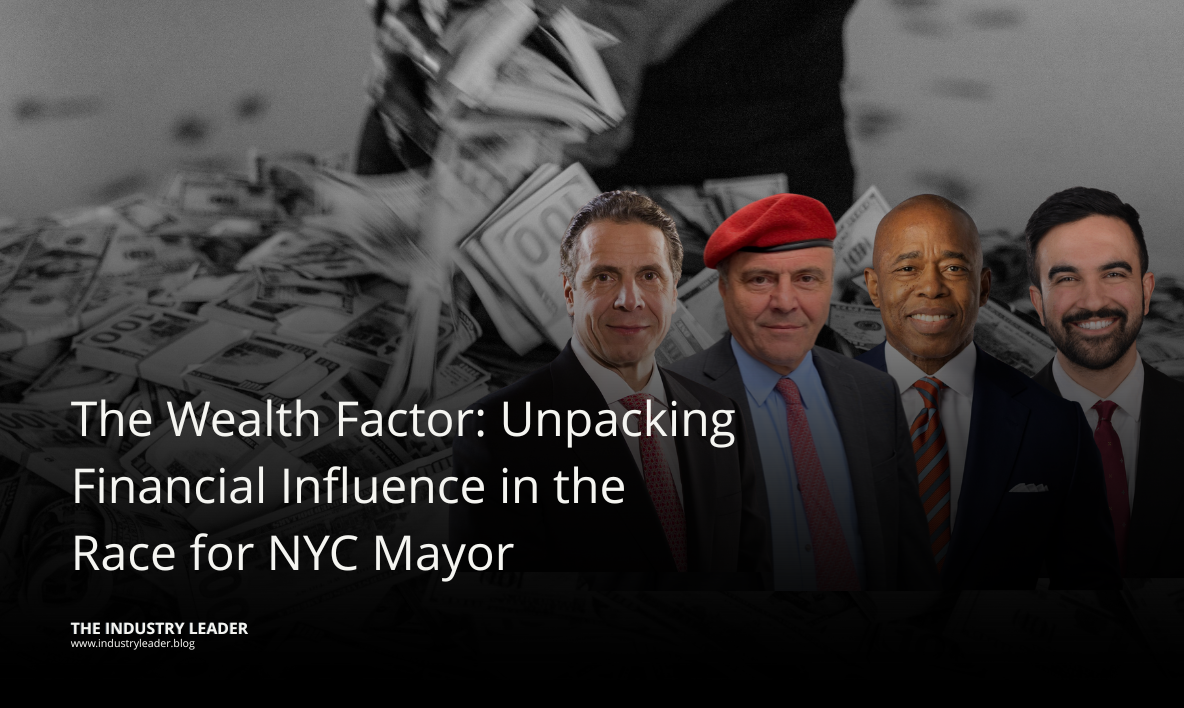
The 2025 NYC mayoral race is a battleground of contrasting styles and strategies, with each candidate’s team leveraging unique strengths to navigate a crowded and volatile field. Eric Adams, Zohran Mamdani, and Andrew Cuomo face distinct challenges, and their campaign operatives are deploying tailored approaches to secure victory.
Andrew Cuomo: Leveraging Legacy and Institutional Muscle
Andrew Cuomo, the former governor staging a comeback, relies on a seasoned team with deep ties to New York’s political establishment. His campaign is reportedly led by longtime aide Melissa DeRosa, who, despite publicly denying her role, is described as the central figure coordinating strategy. Her experience managing Cuomo’s gubernatorial campaigns gives her unparalleled institutional memory, allowing the team to tap into existing networks of donors, unions, and media contacts. Cuomo’s strategists, including pollster Pete Brodnitz of Expedition Strategies, have focused on portraying him as a steady, experienced hand—a counterpoint to Mamdani’s progressive idealism.
Cuomo’s PR team, backed by Bulldog Strategies for media buys, has leaned heavily on legacy media like TV and mailers, and reportedly spent over $25 million in outside funding to attack Mamdani’s inexperience and progressive policies. However, their cautious approach—favoring controlled appearances over large rallies—may have cost them momentum, as Mamdani’s team outmaneuvered them with grassroots energy. A notable misstep was Cuomo’s debate prep, led by attorney Rita Glavin, who focused on mocking Mamdani’s legislative record (e.g., highlighting his three passed bills) rather than building broader voter appeal. This top-down strategy underestimated Mamdani’s ability to expand the electorate, contributing to Cuomo’s primary loss.
Eric Adams: Navigating Crises with Connected Consultants
Incumbent Mayor Eric Adams, running as an independent after opting out of the Democratic primary, faces low approval ratings and lingering scrutiny from past investigations. His campaign has yet to name a permanent manager, with campaign attorney Vito Pitta fielding strategic questions. Adams seemingly relies on firms like Suggs Solutions LLC, led by Brianna Suggs, which has reportedly earned $450,160 for fundraising and consulting since 2022. Bedford Grove and Tulchin Research have also been pivotal, handling fundraising and polling to bolster his legal defense and reelection bid.
Adams’s PR team has leaned on his “law-and-order” image, emphasizing declining crime stats to counter Mamdani’s affordability-focused narrative. His consultants have courted billionaire donors like Bill Ackman and Daniel Loeb, with reports suggesting potential campaign managers were vetted through private interviews with these financial heavyweights. This elite outreach reflects Adams’s strategy to consolidate business support, especially post-primary, as real estate and corporate leaders wary of Mamdani’s tax-the-rich platform shift toward him. However, his team’s failure to secure public matching funds due to fundraising irregularities has limited his financial firepower, forcing a reliance on high-dollar donors.
Adams’s operatives have also avoided risky debates, focusing instead on controlled media appearances to reinforce his “experience over experiment” messaging. This calculated approach mirrors past NYC races, like Michael Bloomberg’s 2009 campaign, where seasoned consultants tightly managed his image to overcome unpopularity and secure a third term.


Zohran Mamdani: Grassroots Innovation and Viral Momentum
Zohran Mamdani, the 33-year-old democratic socialist who stunned Cuomo in the Democratic primary, owes much of his success to a nimble, grassroots-driven campaign. His team, led by campaign manager Charlene Obernauer and deputy manager Katie Riley, has prioritized affordability messaging, with policies like rent freezes and free buses resonating with younger and working-class voters. Finance director Sathvik Kaliyur of NWF Strategies and strategist Morris Katz of Technicolor Political have helped Mamdani raise $10.7 million, including matching funds, outpacing Cuomo’s grassroots efforts despite being outspent by super PACs.
Mamdani’s PR team, with Andrew Epstein transitioning to creative director, has mastered social media, producing viral videos in Urdu and Spanish and incorporating Bollywood clips to engage diverse communities. This digital savvy, coupled with endorsements from celebrities like Emily Ratajkowski and progressive figures like Alexandria Ocasio-Cortez, amplified his reach. His team’s cross-endorsement strategy with candidates like Brad Lander, who shared a progressive base, boosted his ranked-choice voting edge, securing a 12-point primary win.
Mamdani’s operatives also mobilized an unprecedented 50,000 volunteers, a scale unseen in NYC races, per veteran consultant Jerry Skurnik. This grassroots army, paired with targeted outreach to Muslim and South Asian voters, expanded the electorate, drawing in “zero prime” voters who hadn’t participated in recent primaries. His team’s decision to lean into his faith—campaigning at mosques and during Ramadan—further galvanized turnout, making him a historic figure as potentially NYC’s first Muslim mayor.
Pivotal Moves: How Campaign Teams Steer the Race
Debate Calculus: Campaign teams have shaped the 2025 race through strategic debate decisions. Mamdani’s team embraced debates, using his charisma and populist messaging to shine, as seen in the June 4 primary debate where he countered Cuomo’s attacks with relatable affordability pledges. Cuomo’s team, wary of his scandal-scarred image, limited his exposure, opting for smaller venues over public debates, a choice that dulled his campaign’s energy. Adams’s operatives have similarly dodged open debates, favoring media hits where he can control the narrative, a tactic echoing Rudy Giuliani’s 1993 campaign, which leaned on controlled settings to project competence.
Media Mastery: Mamdani’s PR team has dominated social media, using platforms like X to share viral content that resonates with younger and diverse voters. In contrast, Cuomo’s reliance on traditional media—TV ads and mailers—proved less effective against Mamdani’s digital groundswell, mirroring Hillary Clinton’s 2016 struggle against Bernie Sanders’s online momentum. Adams’s team has split the difference, using legacy media to highlight his crime-fighting record while attempting to counter Mamdani’s social media edge with targeted ads.
Fundraising and Outreach: Fundraising strategies reflect each team’s priorities. Mamdani’s team leveraged small-donor enthusiasm and public matching funds to build a $10.7 million war chest, focusing on community outreach in Queens and the Bronx. Adams’s consultants, constrained by the loss of matching funds, have courted billionaire donors, a move that risks alienating working-class voters but mirrors Bloomberg’s donor-driven 2001 and 2005 wins. Cuomo’s team, backed by super PACs and other wealthy donors, spent heavily on anti-Mamdani ads but failed to counter his grassroots momentum.
The Voter’s Blind Spot: Underestimating the Machine
Voters often focus on a candidate’s charisma, authenticity, or policy promises, overlooking the machinery that polishes these traits. Mamdani’s viral videos, Adams’s crime stats, and Cuomo’s moderate messaging are not spontaneous—they’re the product of meticulous planning by strategists and PR teams. In 2001, Bloomberg’s campaign team transformed a political novice into a viable candidate through relentless media buys and image crafting, a playbook Adams’s team is emulating. Similarly, Alexandria Ocasio-Cortez’s 2018 upset of Joe Crowley was fueled by a scrappy team that mastered social media, much like Mamdani’s 2025 operation.
This disconnect can mislead voters into believing they’re choosing a candidate’s raw qualities rather than a carefully curated image. In NYC’s media-saturated environment, narrative control—whether through a viral tweet or a well-timed op-ed—often trumps policy substance. The 2025 race, with its crowded field and polarized electorate, underscores how campaign teams shape voter perceptions, from Mamdani’s grassroots surge to Adams’s elite alliances.
The Big Question: Candidate or Machine?
As New Yorkers head to the polls on November 4, 2025, they face a choice: Eric Adams’s experience, Zohran Mamdani’s vision, Andrew Cuomo’s comeback, or others like Curtis Sliwa or Jim Walden. But behind each candidate is a team of operatives pulling strings, crafting messages, and navigating crises. Are voters choosing the person on the ballot—or the machine that got them there? In a city where narrative is king, the answer may lie more in strategy than sincerity.
Stay tuned for more updates on the 2025 NYC mayoral race, and follow KIRU (@highaski) and The Industry Leader (@theindustrylead) on X for real-time insights and analysis.
Information published to or by The Industry Leader will never constitute legal, financial or business advice of any kind, nor should it ever be misconstrued or relied on as such. For individualized support for yourself or your business, we strongly encourage you to seek appropriate counsel.