Who Controls the Narrative? Media, Power, and the Fight for New York City in 2025
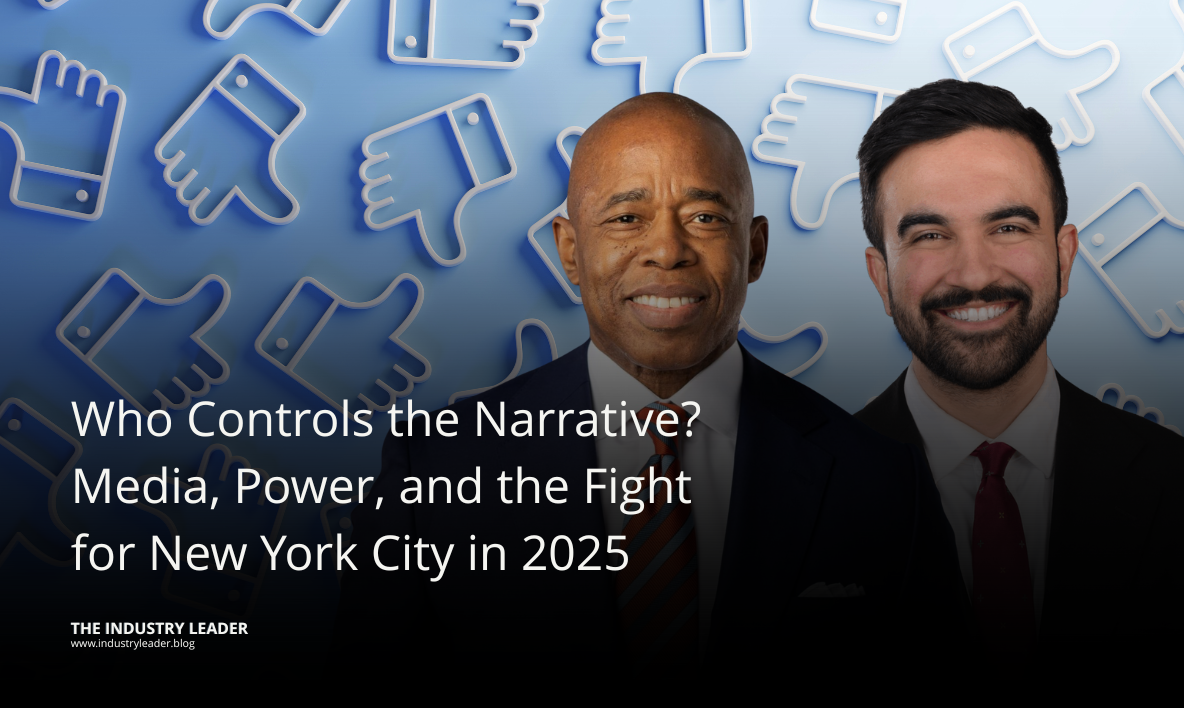
From NY1 segments to viral TikToks, a look at how different platforms are building—and breaking—political credibility in New York City.
every industry needs a leader
•
empower the leader in you
•
every industry needs a leader • empower the leader in you •
In the sprawling, cacophonous arena of New York City politics, elections are won and lost not just at the ballot box, but in the court of public opinion—a court whose proceedings are overwhelmingly dictated by the media. The upcoming 2025 mayoral race presents a vivid case study in this battle of narratives, a contest fought across a fractured landscape of legacy institutions and insurgent digital platforms. At the center of this dynamic are two distinct figures: incumbent Mayor Eric Adams, a master of traditional media, and Assemblymember Zohran Mamdani, a progressive challenger leveraging the power of new media to build a grassroots movement. Their divergent strategies reveal how narrative power is built, contested, and ultimately conferred in the modern political era.
Eric Adams’ incumbency grants him an unparalleled institutional advantage. The mayor’s office is, by nature, a powerful bully pulpit, and Adams has skillfully used it to command the news cycle. While major news organizations like The New York Times, the Daily News, and NY1 are not legally obligated to cover the New York City mayor's daily press conferences, policy announcements, or public appearances, they often do so as part of their role in informing the public and holding officials accountable This consistent visibility, estimated to provide millions of dollars in free media value, allows his administration to set the terms of debate. When the administration announces a 5% decrease in a specific crime category, that statistic leads the 6 o'clock news on WABC-TV and becomes a headline in AM New York, reinforcing his core message of public safety. Even in moments of crisis, Adams’ access to these platforms gives him the first and often most amplified voice to frame the narrative, whether defending a controversial budget cut or responding to a federal investigation.
However, his relationship with the local press corps is often combative, a dynamic that paradoxically can both help and hurt him. His public sparring with reporters can play well with a base that is skeptical of the media, casting him as a fighter standing up to the establishment. Yet, it can also lead to critical coverage that chips away at his perceived competence, with outlets like The City and ProPublica publishing deep-dive investigations that challenge his administration’s claims on issues like housing and shelter capacity. Ultimately, the sheer volume of coverage he receives from legacy media ensures he remains the gravitational center of the political conversation, forcing any challenger to operate in his shadow.
Zohran Mamdani represents the antithesis of this top-down approach. Often marginalized or framed as a “fringe” candidate by mainstream outlets that prioritize the horse race over policy substance, Mamdani has turned to independent and grassroots media to build his political identity. He is a fluent practitioner of the new media arts, using TikTok and Instagram Reels to distill complex policy ideas—like public banking or social housing—into digestible, shareable videos that resonate with younger, more progressive voters. A single 45-second video explaining his stance on a housing initiative can garner hundreds of thousands of views, an audience he would likely never reach through a traditional TV news segment.


This strategy is about more than just social media; it’s about coalition-building in a decentralized media ecosystem. Mamdani frequently appears on progressive podcasts and YouTube channels, and grants extensive interviews to independent news outlets like Hell Gate, The City, and Democracy Now!. These platforms allow him the space for long-form, nuanced conversations that are rare in mainstream political reporting. By collaborating with Substack writers and digital creators who share his political vision, he cultivates an authentic persona as a movement candidate, powered by the people rather than institutions. The critical question remains whether this digital groundswell can generate enough force to counterbalance the immense institutional reach of the city’s legacy media machine.
The contrast reveals a fundamental truth about modern elections: credibility is constructed differently across platforms. An endorsement from The New York Times Editorial Board carries a weight of institutional authority, signaling legitimacy to older, more traditional voters. A morning segment on NY1’s “Mornings on 1” positions a candidate as a serious contender. Conversely, a viral video or an endorsement from a trusted Instagram influencer builds a different kind of credibility—one based on authenticity, relatability, and peer-to-peer trust. Algorithms on these platforms further entrench these narratives, creating filter bubbles where a voter may see only Adams’ tough-on-crime pressers or Mamdani’s calls for tenant protections, hardening perceptions on both sides.
As New York City barrels toward 2025, the electorate is faced with a media landscape that is both more democratic and more polarized than ever. The rise of independent media has undeniably expanded the field, allowing candidates without establishment backing to gain a foothold and energize new voters. Yet, the formidable power of legacy media, with its ability to set the agenda and confer mainstream legitimacy, remains a powerful force in reinforcing existing power structures. This dynamic will profoundly influence campaign strategy, voter turnout, and the very future of electoral storytelling in the five boroughs. The battle for City Hall is a battle for the narrative, and the winner will be the one who best understands how to wield the weapon of media in all its forms.
Stay tuned for our continuing coverage of NYC’s 2025 mayoral race. For real-time updates and analysis, follow KIRU @highaski and The Industry Leader @theindustrylead on X.
Information published to or by The Industry Leader will never constitute legal, financial or business advice of any kind, nor should it ever be misconstrued or relied on as such. For individualized support for yourself or your business, we strongly encourage you to seek appropriate counsel.