Ranked-Choice Voting and the 2025 Mayoral Race: What's Different This Time?
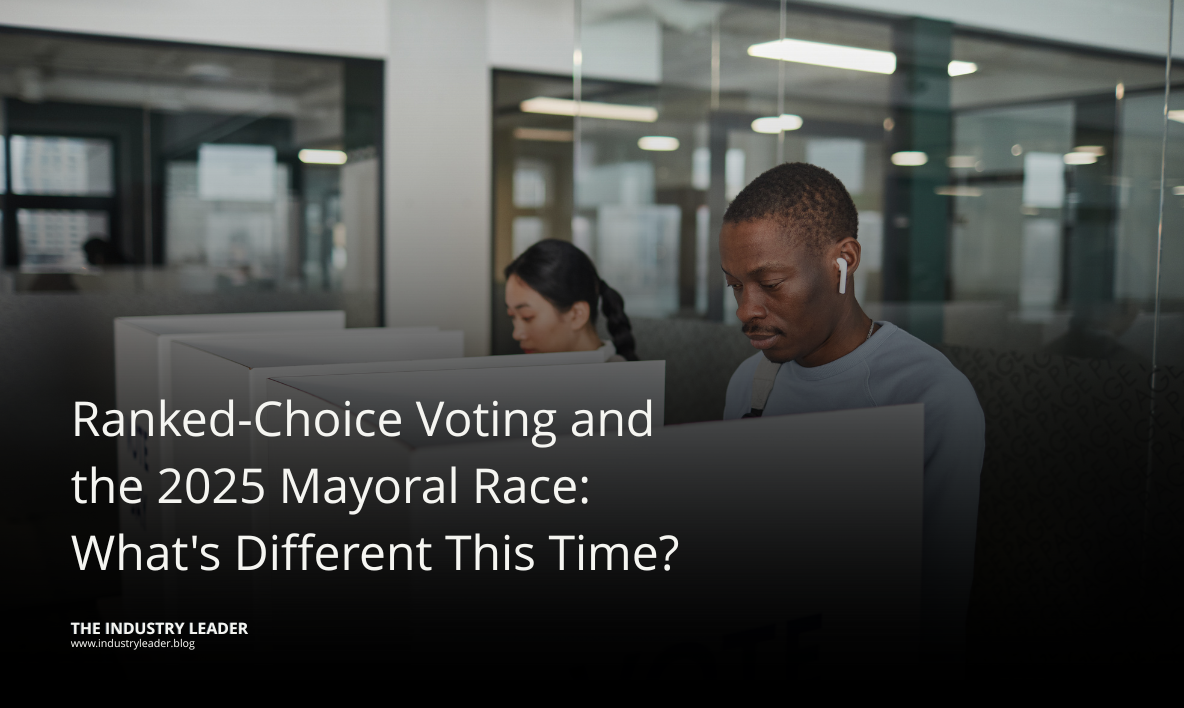
A deep dive into how ranked-choice voting influences coalition-building, voter strategy, and the path to victory in New York City's highly anticipated 2025 mayoral race.
every industry needs a leader
•
empower the leader in you
•
every industry needs a leader • empower the leader in you •
I. Introduction — Changing the Way NYC Votes
New York City’s electoral landscape fundamentally shifted with the adoption of ranked-choice voting (RCV) for primary and special elections in 2019, a system designed to ensure winning candidates secure a majority of the vote. The 2025 mayoral race marks the second time this innovative system will be used in a citywide mayoral contest, and the lessons learned from the tumultuous 2021 election are actively shaping campaign strategies and voter expectations. RCV promises a more nuanced and representative outcome, but its real-world impact continues to be tested in the unique political crucible of New York.
II. How Ranked-Choice Voting Works
At its core, RCV empowers voters to rank up to five candidates in order of preference: 1st, 2nd, 3rd, 4th, and 5th choice. The tabulation process begins by counting all first-choice votes. If no candidate receives more than 50% of these initial votes, the candidate with the fewest first-choice votes is eliminated. The votes from those who ranked the eliminated candidate as their first choice are then redistributed to their second-choice candidate. This process of elimination and redistribution continues in rounds until one candidate crosses the 50% threshold and is declared the winner.
The 2021 Democratic mayoral primary offers a clear illustration. While Eric Adams led in first-choice votes with 30.7%, he did not secure an outright majority. The elimination rounds saw votes from candidates like Andrew Yang (who garnered 12.2% of first-choice votes) and Maya Wiley (21.4%) redistribute. Ultimately, Adams won with 50.4% after eight rounds, narrowly defeating Kathryn Garcia, who secured 49.6% after benefiting significantly from redistributed votes, including a substantial portion of Maya Wiley's support. This demonstrated how RCV can dramatically shift a race's dynamics beyond initial preferences.
III. Campaign Strategy Shifts
RCV inherently incentivizes candidates to seek broader appeal and avoid intensely negative campaigning, as alienating opponents' supporters could cost them crucial second and third-place rankings. The 2021 primary saw a notable shift towards coalition-building and even cross-endorsements among some candidates, like Kathryn Garcia and Andrew Yang, who appeared together to encourage mutual support. This strategy aimed to capture those secondary votes essential for victory. Candidates with a strong core base and the ability to attract broader appeal through moderate stances or collaborative messaging tended to benefit, while those who failed to build bridges risked their voters' preferences being "exhausted" as candidates were eliminated.
In the context of the 2025 race, where Zohran Mamdani emerged as the Democratic nominee, having defeated former Governor Andrew Cuomo in the primary, and Eric Adams is seeking re-election as an independent, RCV's dynamics are particularly fascinating. Mamdani, representing a rising left flank, likely benefited from RCV among progressive voters who may have ranked multiple socialist or left-leaning candidates, ensuring their votes continued to count even if their top choice was eliminated. Mamdani won the Democratic primary with 56.21% of the vote in the final round, benefiting from approximately 99,000 transferred votes, while his opponent Andrew Cuomo received only about 53,000.
Eric Adams, as the incumbent, is navigating a different RCV landscape. His decision to run as an independent, rather than seeking the Democratic nomination again (which went to Mamdani), shifts the general election dynamic. While RCV primarily applies to the primaries and special elections, its underlying principles of seeking broader support and avoiding alienation remain relevant for Adams as he attempts to build a coalition across party lines. Bill Ackman's public endorsement of Adams and call for Andrew Cuomo to withdraw from the race signal an attempt to consolidate moderate and business-aligned voters behind the incumbent, aiming to prevent a fragmented vote that could inadvertently benefit Mamdani. Ackman initially sought to fund a centrist candidate against Mamdani, but shifted to backing Adams, stating Adams was ready to "go to battle, guns blazing" against Mamdani's "socialist/communist" policies. This suggests a strategic effort to encourage a "rank Adams first" mentality among those concerned about Mamdani's progressive platform.


IV. Voter Behavior and Political Identity
RCV fundamentally alters how New Yorkers approach their ballots, encouraging a more strategic mindset. While some voters may still "bullet vote" by ranking only one candidate, data from 2021 indicated that only 46% of Democratic mayoral primary voters used all five slots on their ballot. However, the significantly lower number of inactive ballots in the final round of the 2025 Democratic mayoral primary (approximately 53,000 compared to 140,000 in 2021) suggests a growing understanding and utilization of the ranking system among voters. This implies a move towards more pragmatic voting, where individuals can support their ideological first choice while still casting a meaningful vote for a more viable contender they find acceptable.
New York City's diverse electorate, encompassing a wide range of racial groups, income levels, and political affiliations across its five boroughs, is particularly impacted. RCV is often lauded for its potential to empower underrepresented candidates by allowing voters to support them without fear of "wasting" their vote. This could theoretically broaden the field and lead to more diverse winners, and some analysis suggests RCV contributed to the city electing its first-ever majority-women City Council in 2021. However, whether it fundamentally reshapes existing power structures or simply repackages them remains an ongoing debate. The 2025 primary, where Zohran Mamdani, a democratic socialist, secured the Democratic nomination, indicates RCV's potential to elevate candidates from distinct ideological wings, particularly when a broad base of support exists for similar-minded candidates. First-time voters, immigrants, and young adults, often less tied to traditional party loyalties, may find RCV more appealing due to its emphasis on choice, potentially increasing their engagement and turnout. Notably, the 2025 Democratic mayoral primary saw over 1 million voters, the highest turnout for a city mayoral primary since 1989.
V. Closing Thoughts: 2025 and Beyond
As the 2025 mayoral race heats up, voters and candidates alike should closely watch how coalition-building efforts unfold and how effectively campaigns communicate the strategic advantages of ranking multiple candidates. RCV has the potential to impact voter turnout by making every vote feel more impactful, and it could contribute to a more civil campaign tone by incentivizing candidates to appeal to a broader base rather than resorting to attacks. The legitimacy of the eventual winner, having secured a majority of ranked votes, could also be bolstered.
In a race where political identities — from Mamdani's democratic socialism to Adams' centrist, independent platform — are clearly in motion, RCV is a powerful tool. It can be a force for disruption, enabling candidates with strong, albeit initially smaller, ideological bases to coalesce support. Simultaneously, it can act as a stabilizer, ensuring the ultimate winner has broad acceptance across various voter segments, depending on how effectively candidates build cross-cutting coalitions and appeal for those crucial lower rankings.
Stay tuned for more updates on the 2025 NYC mayoral race, and follow KIRU (@highaski) and The Industry Leader (@theindustrylead) on X for the latest news, analysis, and on-the-ground insights.
Information published to or by The Industry Leader will never constitute legal, financial or business advice of any kind, nor should it ever be misconstrued or relied on as such. For individualized support for yourself or your business, we strongly encourage you to seek appropriate counsel.